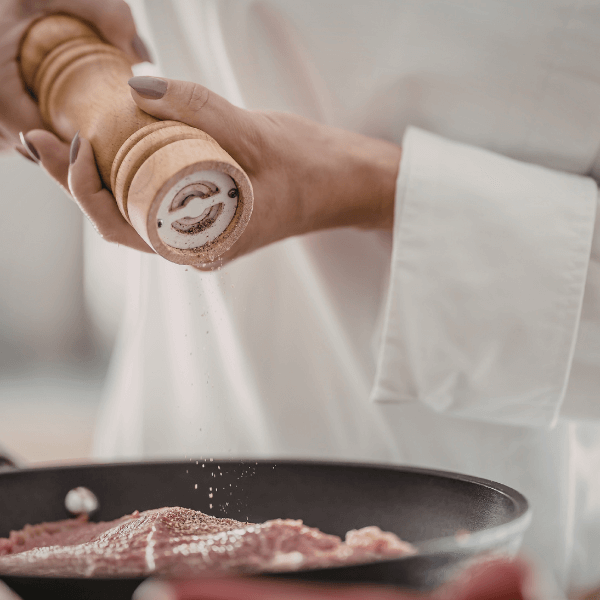
Why seasoning in stages creates better flavor.
One of the biggest seasoning mistakes new cooks make is seasoning only once.
Usually at the end.
Usually in a rush.
Usually with disappointing results.
Good flavor is not just about what you add. It is about when you add it.
Seasoning early builds flavor
Seasoning at the beginning helps flavor move into the food, not just sit on the surface.
This is especially important for:
- Soups and stews
- Sauces
- Grains like rice or pasta
- Proteins like chicken or meat
A small amount of salt early gives the dish a better foundation.
Seasoning during cooking keeps things balanced
As food cooks, it changes.
Liquid reduces.
Ingredients soften.
Flavors concentrate.
That is why seasoning once at the start is not enough. Light adjustments during cooking help keep everything balanced as the dish develops. Taste, adjust lightly, and keep going.
Seasoning at the end adds brightness
Final seasoning is about clarity, not correction.
This is when you add:
- A pinch of salt
- A squeeze of lemon
- Fresh herbs
- A drizzle of oil
These last touches wake food up and make flavors feel finished.
Why one big adjustment rarely works
Dumping in seasoning at the end often leads to food that tastes sharp, salty, or uneven.
Seasoning in stages creates depth and control. Small additions spread over time work better than one big fix.
Seasoning is not a single step.
It is a conversation you have with the food as it cooks. Once you start seasoning in stages, flavor becomes easier and more predictable.